Rhizomatica’s HERMES and Mercury Expand Open-Source HF Communications for Remote Communities While Appealing to Experimenters
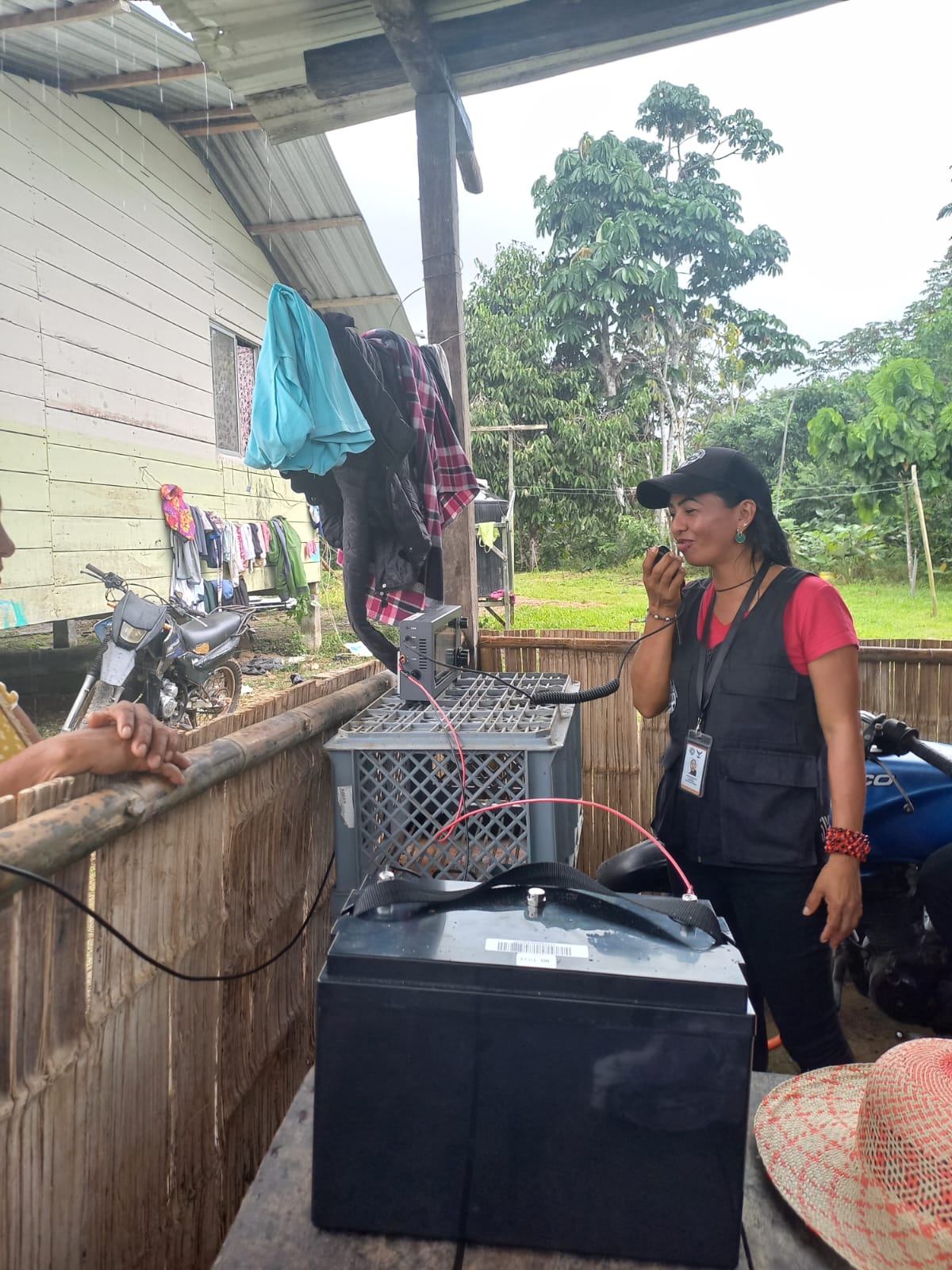
A Waorani technician operating Rhizomatica’s High-frequency Emergency and Rural Multimedia Exchange System (HERMES) in the Ecuadorian Amazon. Image credit: Rhizomatica.
In remote communities where cellular networks and internet service are unavailable or unreliable, high-frequency (HF) radio can provide an alternative for long-distance communications. Rhizomatica, a nonprofit expanding communications access in underserved communities, recognized this potential and developed technology to make HF communications more accessible.
With support from ARDC, they developed the High-frequency Emergency and Rural Multimedia Exchange System (HERMES), a system that allows users to exchange messages, emails, files, and other data over HF. Designed for people without extensive radio or technical experience, Rhizomatica helps communities use and maintain this technology through deployments and local training in areas such as the Ecuadorian Amazon.
In addition, Rhizomatica released Mercury – an open-source HF data modem – in May 2026 to gain greater flexibility to adapt and improve its technology. Integrating Mercury not only made the entire HERMES system open-source but also introduced opportunities for experimentation beyond community deployments. Because Mercury can operate independently of HERMES, amateur radio operators and other experimenters can readily adapt the modem to their own radios and applications and contribute improvements for its continued development.
Making HF Communications More Accessible
Although HF radio can provide long-distance communications without relying on conventional telecommunications infrastructure, setting up and maintaining HF data systems can present technical and financial challenges. Equipment costs, software licensing fees, and the knowledge needed to operate these systems can make them difficult to adopt, particularly in communities with limited resources.
To help users overcome this learning curve, Rhizomatica works with local partners to provide hands-on training for HERMES. Through this training, users learn to install, operate, and maintain their systems, with the end goal of managing their own communications infrastructure.
Rhizomatica also addressed the cost and flexibility challenges of the modem used in HERMES. The system previously relied on VARA, a proprietary modem that required a paid license for each radio. As an alternative, Rhizomatica developed Mercury, an open source modem that provides similar functionality without the licensing fees and makes the entire HERMES system open source. Beyond reducing costs, Mercury’s open source design allows Rhizomatica and other contributors, such as amateur radio operators, to improve the modem’s functionality and adapt it to different equipment and applications. As an example, the team has adapted Mercury to run on a Raspberry Pi Zero, creating opportunities to use the modem with compact hardware, such as the HF Signals zBitx.
Real-World Impact
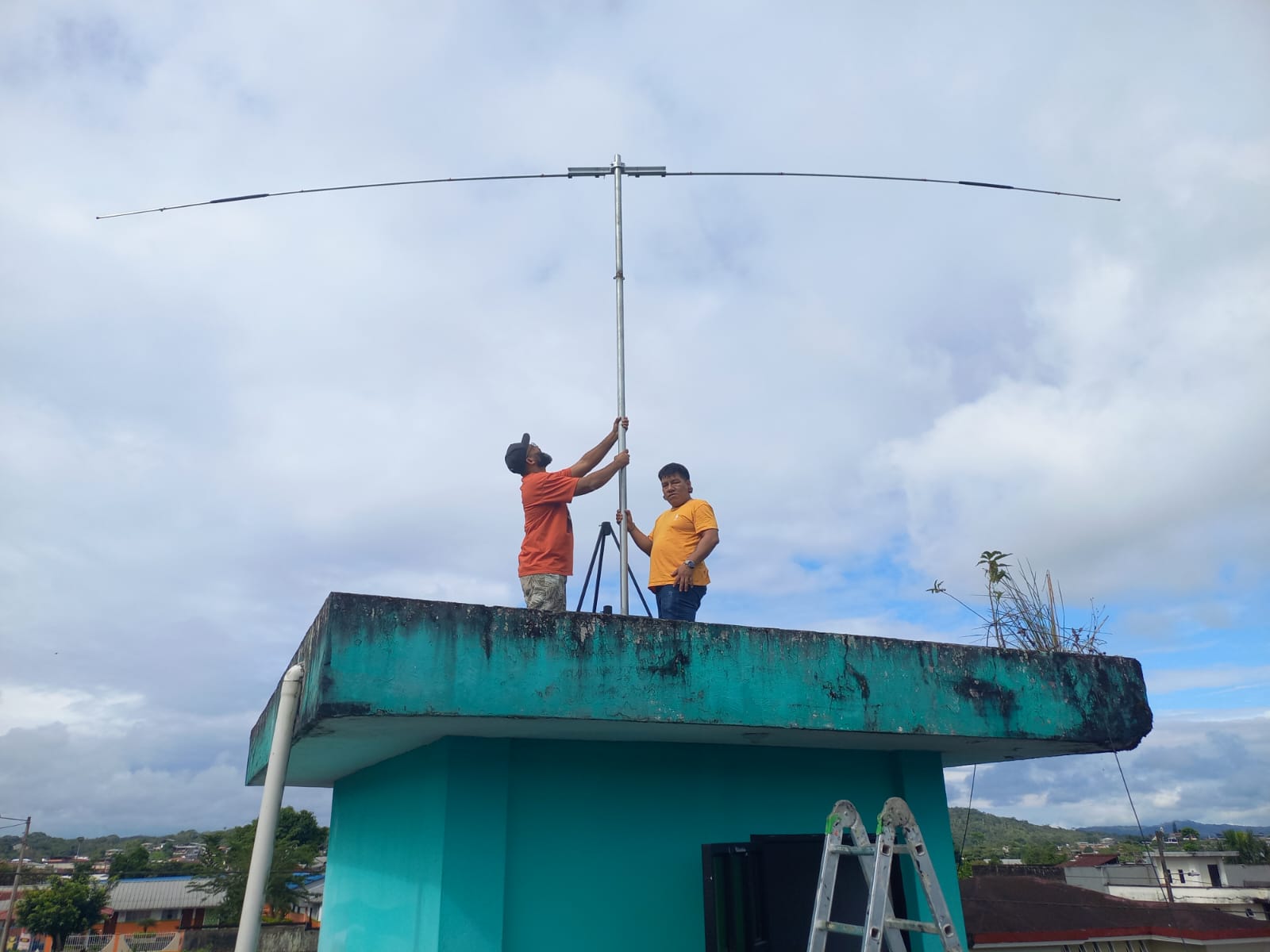
A Waorani technician and a Rhizomatica team member installing an antenna atop the Waorani indigenous nationality government building in the Ecuadorian Amazon. Image credit: Rhizomatica.
Rhizomatica’s largest HERMES deployment includes nearly 90 radios in Waorani Indigenous communities in the Ecuadorian Amazon, where some installation sites take days to reach by foot or boat. Given these distances and the resources required to support this number of systems, Rhizomatica works with local partners to focus the training on a smaller group of community members. This approach helps communities keep their systems operational without relying solely on outside support. As a result of these efforts, HERMES helps communities overcome barriers to staying connected. Older Waorani residents, for instance, can now keep in touch with friends and family in other villages, something that was much more challenging before the HERMES deployment.
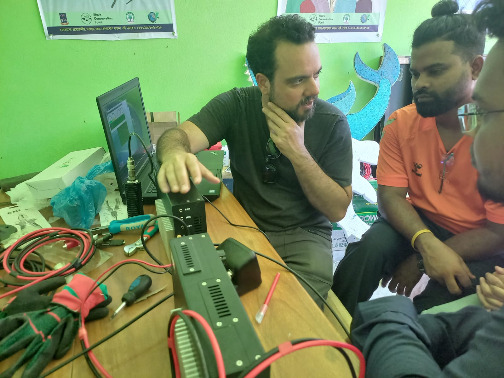
Rafael Diniz PU2UIT, HERMES Architect and Project Lead, teaching conservation team members in Bangladesh how to use HERMES on their fishing boats. Image credit: Rhizomatica.
Beyond the Ecuadorian Amazon, Rhizomatica has deployed HERMES in fishing communities in Bangladesh as part of a conservation project and also established early warning systems in the Central African Republic. These projects demonstrate how HF communications can support different needs in places where conventional communications infrastructure is limited or unavailable.
Mercury’s impact extends outside of Rhizomatica’s deployments. Since its release, amateur radio operators and developers have experimented with different hardware and software configurations, reported bugs, and contributed improvements to the project. For example, amateur radio operators have used Mercury to exchange Winlink emails, an application that the Rhizomatica team had not previously tested. Experimentation from the amateur radio community helps the team learn about additional use cases for the technology, while feedback and contributions inform Mercury’s continued development.
ARDC has supported Rhizomatica through multiple grants, beginning in 2021. This funding has helped the team develop and test the technology, make ongoing improvements, and ultimately reach the milestone of a fully open-source HERMES system.
Looking Ahead
Rhizomatica continues to develop HERMES and Mercury, focusing on improving performance, reliability, and support for additional communications protocols. The team has integrated Reticulum into HERMES, allowing HF links to connect with other networks and route communications between them. Rhizomatica is currently working to integrate Meshtastic, which could connect HF communications with long range (LoRa)-based networks, giving users additional ways to exchange information.
Rhizomatica also plans to expand HERMES’s broadcast capabilities over the coming year, providing another method for distributing files, images, and other information. This would allow users to share information without relying on automatic repeat query (ARQ), reducing delays associated with repeated acknowledgements between stations.
In addition to data transfer, HERMES supports digital voice through its compatibility with D-STAR. The team is also working to integrate FreeDV RADE, giving HERMES users additional options for voice communications over HF.
Learn More
To learn more about HERMES and Mercury and explore the technologies, you can visit the following websites:
- HERMES: https://hermes.radio/
- Mercury: https://mercury.hermes.radio/
Those interested in experimenting with Mercury, contributing to its development, sharing feedback or connecting with others can visit the below resources:
- Mercury GitHub repository: https://github.com/Rhizomatica/mercury
- HERMES mailing list: https://lists.riseup.net/www/info/hermes-general
For additional information about HERMES and Mercury, you can check out these articles:
- IEEE Spectrum article: https://spectrum.ieee.org/hermes-shortwave-radio-digital-data
- Bangladesh deployment project report: https://cnlearning.apc.org/wp-content/uploads/2026/03/Bycatch-Beyond_ABH_updated.pdf
To contact the Rhizomatica team directly, you can email Peter Bloom, Founder and General Coordinator, at peter@rhizomatica.org or Rafael Diniz PU2UIT, HERMES Architect and Project Lead, at rafael@rhizomatica.org.
For questions about this article, contact Rebecca Key KO4KVG, ARDC’s Communications Manager, at rebecca@ardc.net.