Grant: Boston Amateur Radio Club (BARC) & Artisans Asylum (A2) Collaboration for a Successful Urban Ham Radio Capability – “The Urban Ham Blueprint”
Date: January 2023
Amount: $19,300.64
The Boston Amateur Radio Club (BARC) is an American Radio Relay League (ARRL) affiliated group with a mission of educating, mentoring, and promoting the amateur radio community in urban Boston. Currently, their only means of achieving their mission is through attending monthly meetings or organizing group Parks on the Air (POTA) outings. While these meetups have merit, they allow little opportunity for providing club members the appropriate hands-on skill set for digital operations and successful POTA activations.
Artisans Asylum (A2) is a group in Boston that strives to foster a collaborative environment for makers who have the desire to teach, learn, and grow. This grant will provide funding to allow BARC to collaborate with A2 to develop and implement basic, cost-effective hands-on courses on topics such as electronics, building digital transceiver kits, and portable operations in city parks. These courses will provide a positive atmosphere to enjoy the amateur radio hobby, focusing namely on POTA, while also cultivating an environment that is welcoming to newcomers.
Learn more at https://www.barc.org.
Update
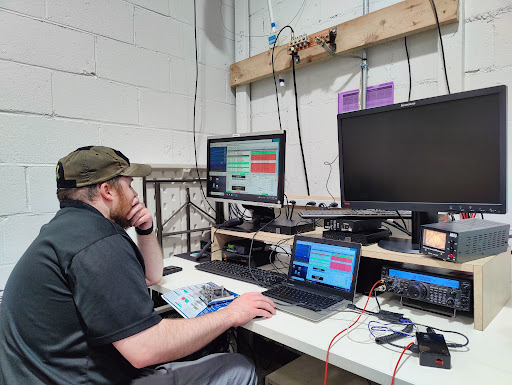
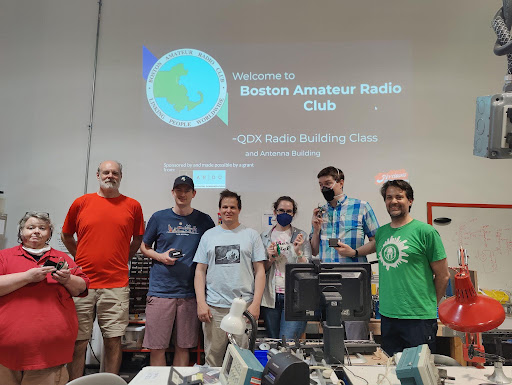
For years, the Boston Amateur Radio Club was active but without a home of its own, a hard place from which to teach the hands-on skills that make amateur radio stick. This grant changed that, funding a partnership with Artisans Asylum, the 24/7 community makerspace in Boston’s Lower Allston, to build a dedicated urban ham radio capability. The club called it its “Urban Ham Blueprint”: a proper station and studio inside the makerspace, plus hands-on courses in the skills city hams need most in a dense, high-noise environment.
The result is a real and lasting home. BARC now holds its monthly meetings, volunteer-examiner sessions, and project builds at Artisans Asylum, with around-the-clock access for members. That presence did just what the club hoped. Its examiner sessions there produced 29 new and upgraded licenses over the grant period, 17 Technician, 6 General, and 6 Extra, earned by everyone from high-school students to the recently retired, and open to the public rather than members alone. Membership grew from about 90 to 130 across the two years, reversing the flat stretch of the COVID era.
The teaching found its footing fast. Members built and operated QDX digital transceiver kits, got on the air with FT8, and learned to build and tune end-fed wire antennas; interest then carried the program past its original plan into classes on tape-measure Yagis, J-poles, multimeter basics, and fox hunting, all offered to the public at cost. Bringing a station into a makerspace also bridged two communities that rarely overlap, with several Artisans Asylum members now working toward licenses of their own.
The club’s own lessons are worth passing along: a deep bench of volunteers matters more than any single piece of equipment; starting small, with high-impact classes, built the credibility everything else grew from; and the urban RF environment, for all its frustrations, proved a teacher in its own right. Most of all, a welcoming place to gather is what gets people through the door, and it has been the biggest driver of the club’s growth.