Grant: Making air waves in the Classroom
Date: March 2025
Amount: $3,303
The Panthers Amateur Radio Club, based in Battiest, a small rural town in southeastern Oklahoma, is comprised of teachers, students, support staff, and community members. The club is committed to introducing young people to amateur radio and equipping them with the skills and licenses needed to operate on the air. With support from this ARDC grant, PARC aims to build a sustainable ham radio program focused on student education, community engagement, and emergency communication. The project’s core goal is to train and license a new generation of operators who can both enjoy the hobby and serve their community in times of need.
Students from 4th grade through high school, as well as adults, will learn the fundamentals of radio technology, antenna design, and wave propagation through classroom instruction and after-school labs. As they progress, they will gain hands-on experience using real radio equipment, participate in outdoor operating events like Parks on the Air (POTA), and prepare for FCC licensing exams. A licensed teacher will lead the program with support from local hams and volunteers. Equipment purchased through this grant will serve as both a learning tool and a community resource, available for licensed public use and deployable during local emergencies.
Through this project, PARC will expand access to amateur radio, encourage STEM learning, and strengthen community readiness, all while giving students the rare opportunity to connect with the world from their small corner of Oklahoma.
Update
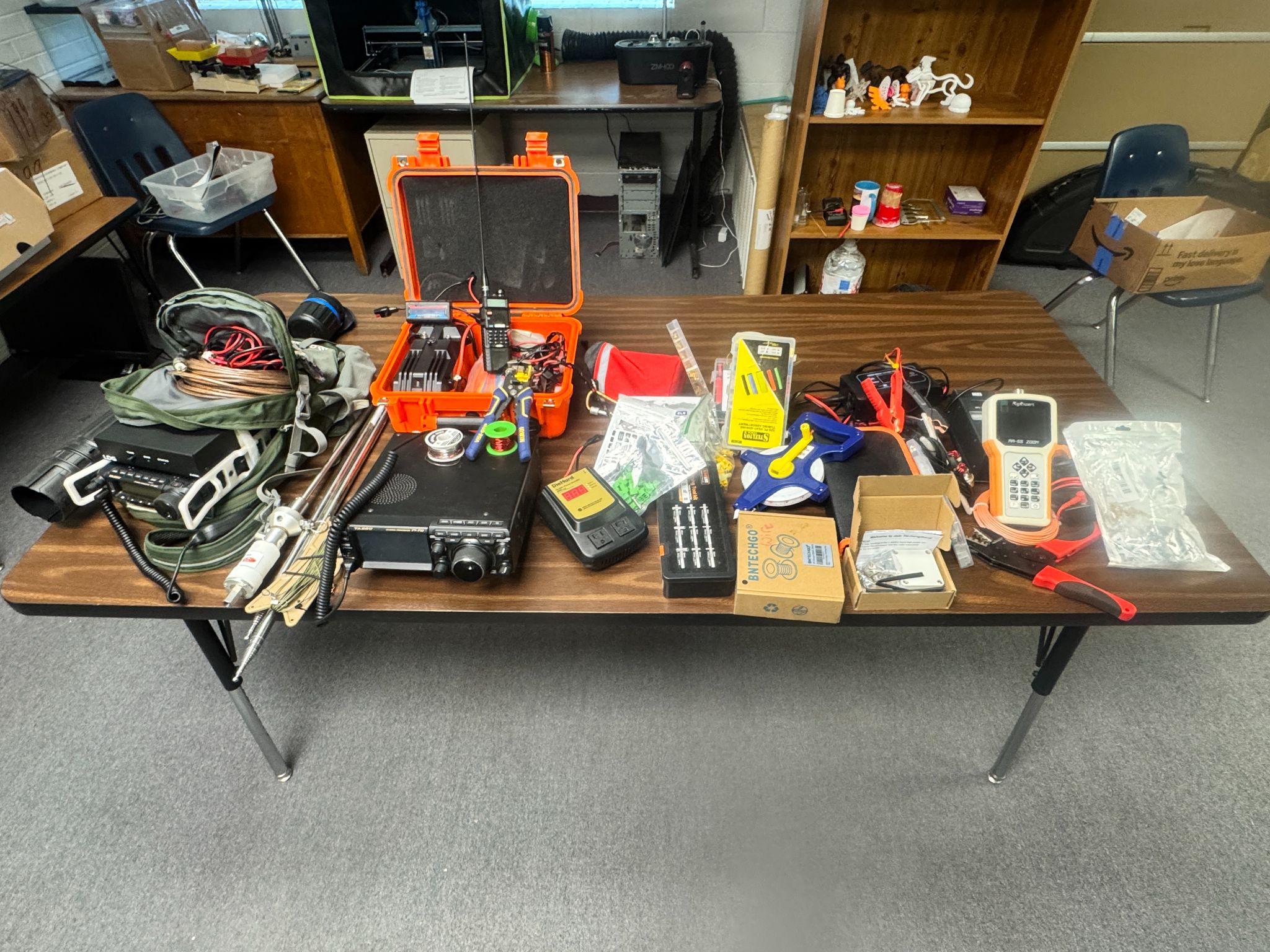
Battiest, Oklahoma is in a rural, isolated, and economically depressed part of the state. Curtis Allen, a teacher at the Battiest Public School is an avid ham (KJ5DYQ) and has been seeking to begin an effort entitled “Making Air Waves” at the school to foster interest among students, incorporate lessons into his classes, and in general, boost amateur radio usage in the community as a whole. Mr. Allen sought a grant from ARDC for $3300 to purchase various types of equipment to introduce the students to the hobby and then let them learn how to use it properly. The ultimate goal was to train and license a new generation of operators who can both enjoy the hobby and serve their community in times of need. This included antennas, radios, and associated other needs such as cabling, an antenna analyzer and other pieces needed for instruction and then deployment.
A club was formed and based at the school that consisted of teachers, support staff, community members and students. Mr. Allen was planning on approximately 50 students taking part, but more than 70 students in grades 2 through 6 participated, along with other teachers also interested in obtaining their licenses. Mr. Allen’s son, a 16 year old, passed his Technician and General license tests. The program was more successful than anticipated. Students learned about propagation and antenna science and were able to build their own antennas, which they then deployed and used. Several were able to make contacts with other hams throughout the US. The club remains successful, and they are looking to obtain a club call sign. Several students are studying and working to pass their license exams. Mr. Allen is also looking into obtaining and installing a permanent antenna setup at the school. Future plans include trying to get older students more involved in the effort and a POTA activation at a state park.